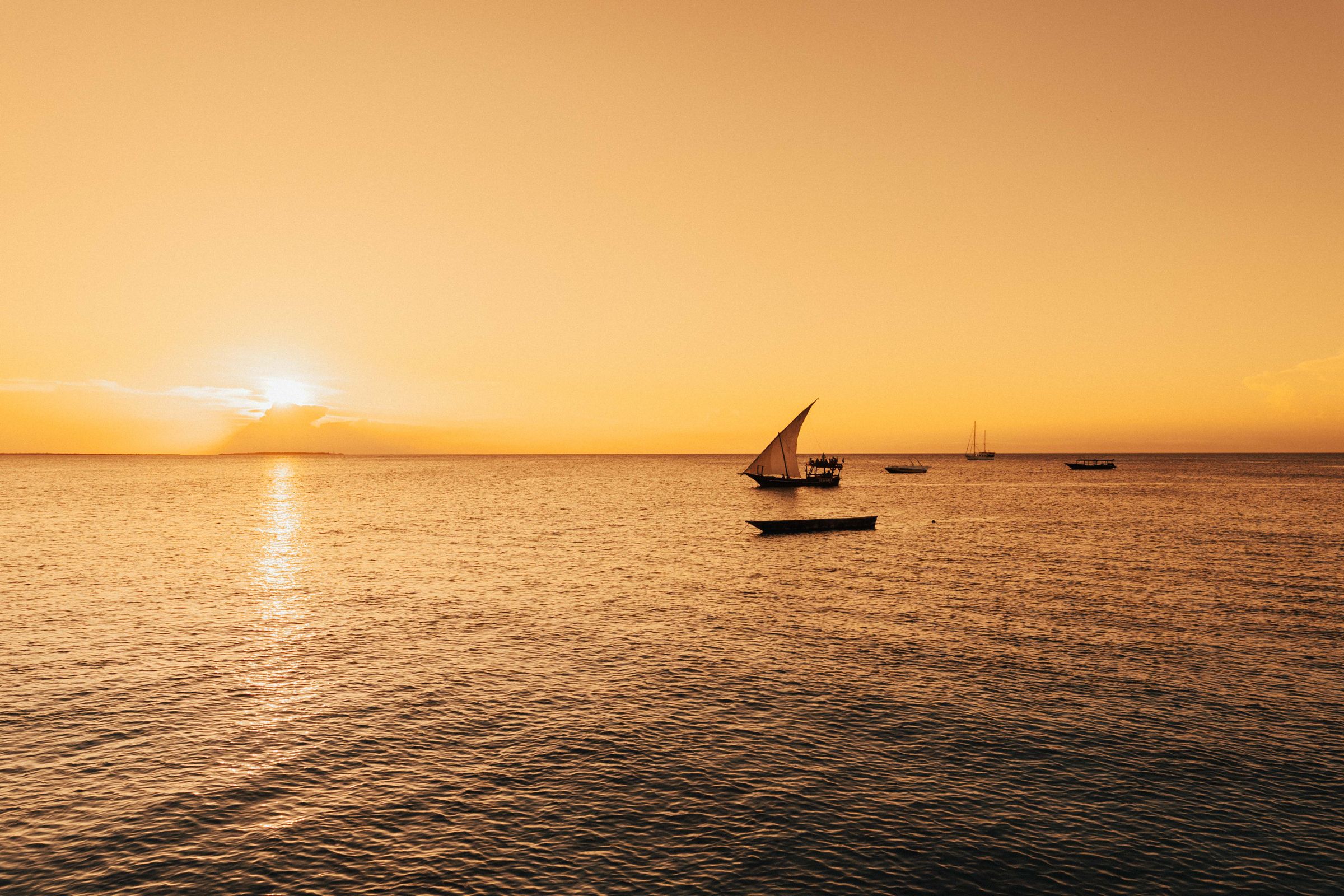
Zanzibar travel guide

The most popular beach extension we arrange, and the one that needs the most planning.

Zanzibar is part of Tanzania, which means a separate entry requirement from Kenya and its own arrival formalities. It is also, for most people, worth the extra paperwork.

The archipelago sits about 35 kilometres off the Tanzanian mainland. Unguja — the island everyone means when they say Zanzibar — is roughly 85 kilometres long, so nowhere is more than about two hours from anywhere else.

The island trades in two things: a coastline of very white sand and very clear water, and Stone Town, a UNESCO World Heritage Site built on the wealth of the spice and slave trades. Most visitors give themselves a night in town and the rest on a beach.

Choosing a beach

This is the decision that most affects how your week feels. The east coast has the whitest sand and the strongest tides; the north has swimmable water at any hour and more nightlife.

Nungwi and Kendwa

North · minimal tidal range

The north tip is the only part of the island where you can swim at any state of the tide, which is why it is the busiest. Kendwa is the quieter of the two and has the better sunsets; Nungwi has the dhow builders, the turtle sanctuary and most of the bars. Roughly an hour from the airport.

Paje and Jambiani

South-east · big tides, kitesurfing

A long shallow lagoon protected by a distant reef, which makes Paje the kitesurfing centre of East Africa. At low tide the water retreats up to a kilometre and seaweed farmers work the flats — a sight in itself, but not a swim. Jambiani next door is quieter and more village-like. Both are excellent value.

Matemwe and Pwani Mchangani

North-east · quiet, close to Mnemba

The east coast without the kitesurf crowd. Matemwe faces Mnemba Atoll, which has the best diving and snorkelling in Zanzibar, and the reef is a short boat ride offshore. Tidal, so check the table, but the villages here still feel like villages.

Stone Town

West · one or two nights, not a week

Not a beach, and not somewhere to spend your whole stay, but do not skip it. Carved doors, the old slave market site, the Forodhani night food market and a maze of alleys that no map survives. One or two nights at the start or end works best, and the airport is fifteen minutes away.

Practical notes

Getting there from Kenya

Direct flights run from Nairobi and Mombasa to Zanzibar, usually via Kenya Airways or a regional carrier, and take between one and two hours. This is a separate international flight — build in time for immigration at both ends.

Entry and insurance

Tanzania requires its own visa, arranged separately from any Kenyan authorisation, and since late 2024 all visitors must hold Tanzanian inbound travel insurance bought online before arrival. Check the current requirement before you book, as this does change.

Dress and custom

Zanzibar is predominantly Muslim. Beachwear is fine on hotel beaches and nowhere else. In Stone Town and the villages, shoulders and knees covered is the norm and is noticed and appreciated.

When to go

June to October is dry, breezy and reliable. December to February is hotter and also good. The long rains fall in April and May, when many properties close. November brings short afternoon showers.

Money

The Tanzanian shilling is the local currency but US dollars are widely accepted for hotels and tours. Carry small notes for the markets, and bring dollars printed after 2009 — older notes are often refused.

How long

Five to seven nights is the sweet spot after a safari: enough to unwind, see Stone Town and do one boat day, without running out of things to do.

Worth a day of your week

  • A spice farm tour — cloves, nutmeg, vanilla and cinnamon still growing where the island's wealth came from
  • Mnemba Atoll by boat for snorkelling, and dolphins on the way out
  • Jozani Forest, the only place on earth to see the Zanzibar red colobus
  • The Forodhani Gardens night market in Stone Town, from about six in the evening
  • A sunset dhow cruise out of Stone Town or Kendwa
  • Prison Island for the giant Aldabra tortoises, some well over a century old
  • The Rock restaurant at Michamvi, which stands on a coral outcrop in the sea

Coast safaris and beach extensions

Plan a safari

Tell us when, where and how you like to travel. We will do the rest.